
Mount Kenya climbs
Mount Kenya Trekking
Guided treks to Point Lenana on Africa’s second-highest mountain, through forest, moorland and glacial valleys.
Summit
Point Lenana, 4,985 m
Routes
Sirimon, Naro Moru, Chogoria
Length
Four to six days
Style
Fully guided climbs
Summit
Point Lenana, 4,985 m
Routes
Sirimon, Naro Moru, Chogoria
Length
Four to six days
Style
Fully guided climbs
No ropes needed
Point Lenana is a trek, not a technical climb. Fitness and a steady pace matter most.
Climb Africa’s second-highest mountain
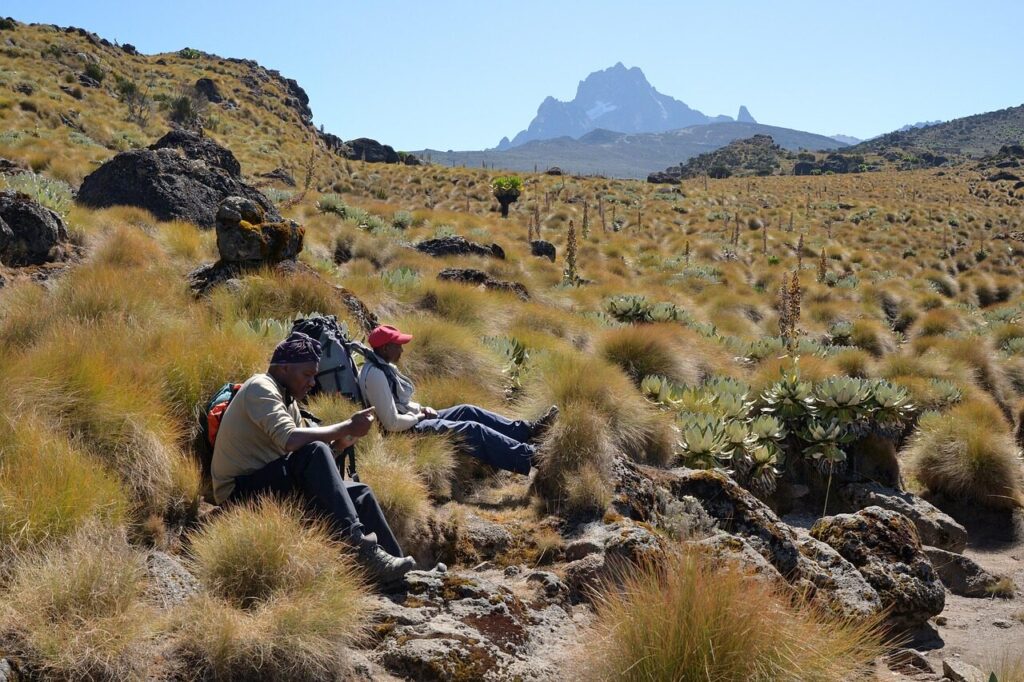
Mount Kenya rises from the central highlands a few hours north of Nairobi. Its trekking summit, Point Lenana, can be reached without technical climbing.
Our climbs are led by experienced mountain guides, with cooks and porters to carry the loads, so you can focus on the walk. Routes pass through bamboo forest, open moorland and glacier-carved valleys on the way to a sunrise summit.
Along the routes
- Sirimon gate
- Old Moses Camp
- Shipton’s Camp
- Point Lenana
- Lake Michaelson
- Chogoria gate
Choose your route
Pick a trek and we handle the permits, the crew and transport from Nairobi.
- Mount Kenya National Park
- 5 Days 4 Nights
- Mount Kenya National Park
- 4 Days 3 Nights
The routes up Mount Kenya
Each route has its own character. Tap a card to learn more about the mountain.
What to expect on the mountain
Hover or tap a card to see what each stage of the climb is like.
Forest and bamboo
Forest and bamboo
High moorland
Huts and camps
Huts and camps
Summit sunrise
Summit sunrise
Your mountain crew
Your mountain crew
Glacial lakes
How a Mount Kenya climb works
Every climb follows a steady rhythm to help you acclimatise.
Day 1
Drive to the gate
Leave Nairobi for the park gate and start walking.
Early days
Forest and moorland
Climb through the forest onto the open moorland.
Before the summit
High camps
Rest and acclimatise at the high camps.
Summit day
Summit sunrise
Reach Point Lenana at dawn, then begin the descent.
Planning your trip
The practical details, so you can decide how to travel and where to stay.
Preparing for the climb
Fitness and health.
- Fitness: regular hiking or cardio in the weeks before helps a lot.
- Altitude: walk slowly, drink plenty of water and tell your guide if you feel unwell.
- Best months: January to February and August to September are the driest.
What to pack
For cold nights and wet days.
- Warm layers: nights near the summit drop below freezing.
- Waterproofs: a rain jacket and trousers for forest showers.
- Good boots: broken-in hiking boots and warm socks.
Park and camping fees are charged by Kenya Wildlife Service. We confirm exactly what is included when you book.
Mount Kenya trekking FAQs
Can’t see your question here? Our Nairobi team is available 24/7.
Talk to Serval Tours and Travel
- +254 792 335842 (call or WhatsApp)
- info@servaltoursandtravel.com
- Blessed House, Thika Road, Nairobi
- P.O. Box 22122-00100, Nairobi
- Available 24/7
Which route is best for beginners?
Sirimon is a good choice, with a steady climb and good acclimatisation.
How long does the climb take?
Most treks take four to six days, depending on the route.
Do I need climbing experience?
No. Point Lenana is a trek, not a technical climb. You need good fitness and a steady pace.
Will I get altitude sickness?
Mild symptoms are common. Our itineraries are paced to help you acclimatise, and guides watch the group closely.
What is included in a trek?
Each itinerary lists what is included, such as transport, park fees, guides, porters, cooks, meals and accommodation on the mountain.
How cold does it get?
Nights near the summit fall below freezing, so pack warm layers and a good sleeping bag.
Can I hire gear?
Some items can be hired locally. Tell us what you need and we will advise.
Can I add a safari after the climb?
Yes. Ol Pejeta, Samburu and Lake Nakuru are all within easy reach of the mountain.
Ready to stand on Point Lenana?
Tell us your dates, group size and fitness level. We’ll recommend the right route and plan your climb.